
The EU-US Open Skies Agreement

The foundation of modern day transatlantic travel, the EU-US Open Skies Agreement, which came into effect in 2008, revolutionized transatlantic flights. In this blog post I take a look at this agreement. I examine how it came about and what the key terms of the agreement are, from less government restrictions to deeper alliance cooperation. I also examine the impact the agreement has had on transatlantic flying in the years immediately after it came into effect.
What the EU-US Open Skies Agreement is
The EU-US Open Skies Agreement is an Open Skies Air Transport Agreement between the European Union and the United States. The agreement replaced dozens of restrictive bilateral treaties, creating a new single EU-wide aviation market with the US.
The agreement allows any airline of the European Union and any airline of the United States to fly between any point in the European Union and any point in the United States.

There was less government restrictions on flights. Both EU and US airlines could choose routes, capacity and pricing freely for transatlantic flights with no government caps on frequency or aircraft type. The agreement allowed unlimited codeshares, enabling deeper alliances. The agreement also supports major alliances through antitrust immunized joint ventures. The agreement also allowed greater freedom for wet-leasing and other agreements.
Both EU and US airlines are allowed to fly on to a further destination in another country after their initial stop.
Since the EU is not a single country, US airlines can fly between two points in the EU as long as the flight is a continuation of a flight which started in the United States. For example, a US airline could fly from Chicago - Madrid - Paris.
EU airlines are also allowed to fly between the US and non-EU countries which are part of the European Common Aviation Area, like Switzerland.
EU and US airlines can also operate all cargo flights under seventh freedom rights, meaning US airlines' all cargo flights can operate from one EU country to any other country, including another EU country. EU airlines' all cargo flights can also operate between the US and any other country. For example, Air France Cargo flies an all cargo Boeing 777 from Chicago to Dublin and then on to Paris. Additionally, both US and EU airlines can operate all-cargo flights that don't need to start or end in their home country.

How the Open Skies Agreement came about
The agreement replaced and superseded previous open skies agreements between the US and individual countries. Before the EU-US Open Skies Agreement, 16 EU countries had signed open skies treaties with the USA. These agreements gave the participating EU airlines the right to fly, without restriction on capacity or pricing, to any point in the United States, from their own country. The agreement replaced these restrictive bilateral treaties, creating a new single EU-wide aviation market with the US.
The EU-US Open Skies Agreement emerged from multiple factors such as the US push for liberalized aviation which began in the 1970s, the EU's creation of a single aviation market in the 1990s, and the success of early US Open Skies Treaties - especially the landmark 1992 US-Netherlands agreement which became a template for the 2007 deal. By the early 2000s, the United States and Europe were restructuring their aviation regulations, shifting towards a less protectionist approach. This enabled the way for the EU-US Open Skies Agreement.
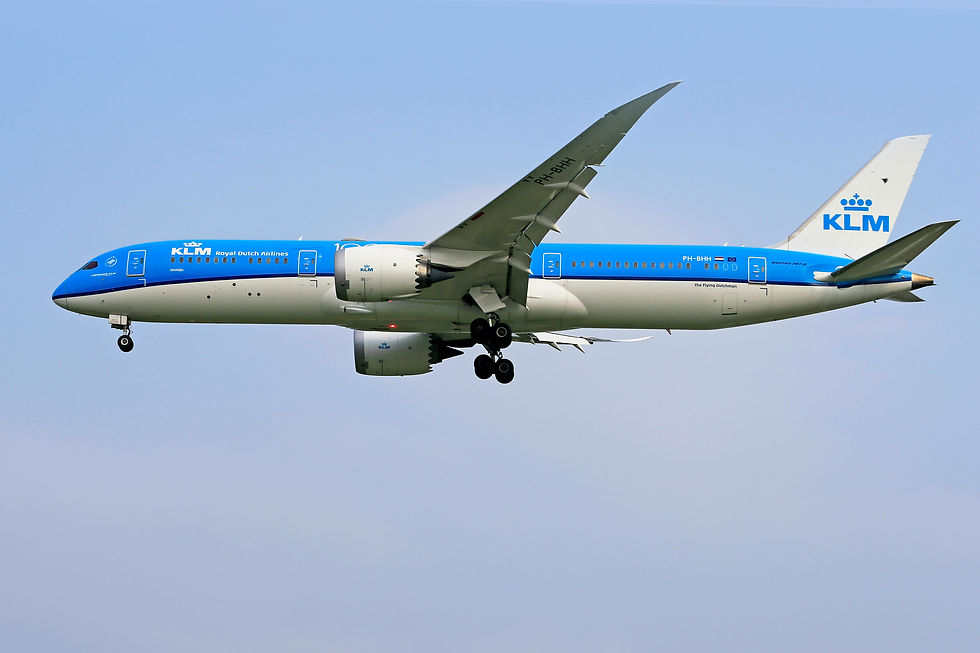
The initial agreement was signed in Washington DC on 30 April 2007 and came into effect on 30 March 2008. Phase two of the agreement was signed in June 2010.
Impact of the Open Skies Agreement
Norway and Iceland acceded to the Agreement in 2011 and their airlines now enjoy the same rights as EU airlines.
The treaty disappointed European Airlines as they felt it was tilted in favor of US airlines. While US airlines were allowed to operate intra-EU flights (provided it was an all-cargo flight or the second leg of a passenger flight which started in the US), EU airlines were not permitted to operate intra-US flights, nor were they allowed to purchase a controlling stake in a US operator.
The EU-US Open Skies Agreement had a significant impact on London Heathrow Airport.
Under the agreement, London Heathrow was opened to full US competition for the first time, ending the Bermuda II restrictions. The Open Skies Agreement ended the exclusive right granted for only two US airlines and two UK airlines to fly transatlantic services out of Heathrow. The two US airlines were United Airlines and American Airlines and the two UK airlines were British Airways and Virgin Atlantic.

The EU-US Open Skies Agreement resulted in the expansion of London, and particularly London Heathrow. This can be seen by the fact that British Airways moved its services from London Gatwick to London Heathrow and Air France introduced a daily flight between Heathrow and Los Angeles. The access of US airlines to Heathrow also contributed to its expansion.
Third country carriers with fifth freedom rights to carry passengers between London Heathrow and the United States can do so. These rights were previously exercised by Air New Zealand (between Los Angeles and London Heathrow), as well as Air India (between New York, JFK and London Heathrow) and Kuwait Airways (between New York, JFK and London Heathrow). El Al also has these rights but chose not to use them. Iran Air also technically has similar rights but is prohibited from flying to the US due to sanctions.
As a result of this agreement, other airlines began flying transatlantic routes to and from London Heathrow. Delta Air Lines began services from Atlanta, New York/JFK, Boston, Detroit and Seattle to London Heathrow in 2008. Additionally Northwest Airlines, Continental Airlines and US Airways began flights to Heathrow but these ceased after the mergers with Delta, United and American respectively.

However, expansion of transatlantic flights to and from London Heathrow continues to be limited by a lack of runway capacity. London Heathrow currently operates at over 98% capacity with its two runways. Additionally IAG airlines such as British Airways, Aer Lingus and Iberia account for 54% of the slots at Heathrow.
The EU-US Open Skies Agreement also had an impact on transatlantic fares. At the time there was little consensus on whether or not increased transatlantic competition would have any impact on fares. Some people believed that the transatlantic market was already highly competitive while other people predicted fares as low as £10.
A number of new airlines have tried to enter the transatlantic market with a long-haul, low cost business model, attempting to adopt the short-haul, low cost business model to transatlantic flights. Some examples are FrenchBee and LEVEL. In 2007, Ryanair announced that it was planning to start a new airline, called RyanAtlantic, which would operate long-haul flights between Europe and the United States. Unfortunately the project was cancelled. It would have been interesting to see what a transatlantic Ryanair-style flight would be like.
In 2014, Norwegian Air Shuttle announced that it would start low-cost flights to the US from the Republic of Ireland and later the United Kingdom. These flights were to be made possible by newer narrowbody and widebody aircraft with increased range and fuel efficiency. The Irish and UK subsidiaries applied for US permission to operate these routes which was met with resistance in the US. Eventually, after the EU said it would initiate arbitration procedures under the agreement, the US granted the Norwegian subsidiaries the right to fly to the US.
A study published in 2014 looked at the EU-US Open Skies Agreement and published the findings. Before the agreement came into effect it was estimated that the agreement would result in more competition, largely from new airlines entering the market with different business models. This can be seen by the existence of low-cost and leisure focused airlines that fly transatlantic such as: Norse Atlantic, French Bee, Condor, Discover Airlines and more. It was also estimated that the cost reduction in cargo services and greater access to express services would grow cargo demand by 1 - 2% in the transatlantic cargo market.

Other positive consequences of the agreement were predicted, including: more route offerings, increased competition, and more cooperation and coordination of prices and schedules. However, not all of these effects actually occurred and the main impact appears to have been mainly route changes.
These route changes can be witnessed by the fact that one year after the enactment of this agreement, routes offered from Ireland to the United States increased from 3 to 10 and passengers could save time by having more opportunities to fly directly from Dublin.
As a result of the agreement some US states lost direct flights to Europe. Maine and Connecticut both lost all non stop flight to Europe. In some cases, states such as California had a reduction in the number of direct flights to Europe but this reduction was offset by aircraft enhancements, such as increased passenger capacity etc. It is also worth remembering that this reduction in flights can also be attributed to the 2008 economic crisis.
The reduction in flights can also be explored further. In 2010, after the Open Skies Agreement, customer choice was reduced due to a reduction in non-stop flights. Both Hungary and Romania in Europe and Connecticut and Maine lost non-stop transatlantic flights. In 2007, before the agreement, 40 European cities had non-stop flights to the US but by 2010 this had reduced to 34.
Part of this reduction could be contributed to airline alliances. As a result of the agreement, airlines were allowed greater cooperation with alliance partners. This means that airlines did not have to fly to as many destinations, instead they could use codeshares and alliance partners to connect passengers on further. For example, Instead of British Airways flying from London to both Dallas and Kansas, they could only fly to Dallas and let their oneworld alliance partner, American Airlines, fly to Kansas. This means that passengers can fly with British Airways from London to Dallas and connect on to Kansas with American Airlines.

The data from the study published in 2014 also shows that airline alliances played a key role in transatlantic flights. Table 1 shows what percentage of market share was held by each airline alliance in 2007 and 2010.
Table 1: Table showing what percentage of market share each airline alliance held in 2007 and 2010
Star Alliance | SkyTeam | Oneworld | Other | |
2007 | 26.1% | 34.2% | 23.4% | 16.3% |
2010 | 36.7% | 28.4% | 24.4% | 10.5% |
Change | +10.6% | -5.8% | +1% | -5.8% |
Interestingly between 2007 and 2010, Star Alliance and the Oneworld Alliance both increased their market share, with Star Alliance significantly increasing their market share, while SkyTeam's market share on transatlantic flights decreased from 34.2% in 2007 to 28.4% in 2010. The market share held by 'other' airline alliances also decreased.
Despite some reduction in flights, Spain and Sweden, California, Colorado, Florida, Maryland, Minnesota, North Carolina and Texas are characterized by an increase in seat capacity on EU-US flights compared to other markets.
The data also shows a decrease in both direct and one-stop flights. This is likely due to the removal of routes which were previously served as well as only partial replacement by new routes. On examination of the data on transatlantic services, 42 routes were removed while 26 new routes were added. The UK was the most affected as 17 US-UK routes were removed while only 7 new routes were introduced. For these new routes, London Heathrow was the main beneficiary, with 5 new routes to the United States.
However, in France, Spain and Sweden, no routes were cut and the number of city pairs increased by 5, 2 and 1 respectively. In the United States, new routes were offered from Texas, New York, Florida, North Carolina and Minnesota while routes were cut from New York, Georgia, New Jersey, Illinois and Ohio.
Additionally, competition between carriers in flying direct transatlantic routes has decreased due to fewer airlines flying transatlantic as well as consolidation of the market. However research published in 2014 describes that competition among hub airports increased in 2010. EU airports also increased their ranking among the world's top 10 hubs due to improved quality of service.
As a result of the Open Skies Agreement, the number of airlines offering non-stop transatlantic flights decreased from 45 in 2007 to 33 in 2010. 16 carriers stopped flights while only 4 airlines (Air Berlin, Thomson Airways, Open Skies, and Air Europa) started flights. The difficulties in operating a long-haul, low cost business model and the presence of entry barriers (such as slot allocation) for new airlines contributed to the unexpected impact of this agreement.
Consequences of the United Kingdom leaving the European Union
At the time there was debate around the consequences that Brexit would have on UK and US airlines flying between the UK and the USA. In November 2018, the UK agreed an individual Open Skies Agreement with the United States that would supersede the EU agreement post-Brexit. The UK-US Open Skies Agreement came into effect on 1 January 2021. It provided the same freedoms as the EU-US Open Skies Agreement: free pricing, unlimited frequencies, and broad route rights. However, there are some practical changes with how airline ownership is treated.

Clearly the EU-US Open Skies Agreement revolutionized transatlantic flying. From removing government restrictions on pricing and aircraft type to the launch of new routes and deeper alliance partnerships, the agreement has shaped transatlantic travel to how we know it today.
What do you think about this agreement? 20 years on is it outdated or does it still serve its purpose. Share your thoughts by leaving a comment below, on our group discussion page or on social media. You can also contact Av Geek Blog through the contact form on the website or by email.
Thank you for reading.
X: avgeek_blog
Instagram: avgeek_blog
Email: geekofairlines@gmail.com
Date Published: 13 June 2026


Comments